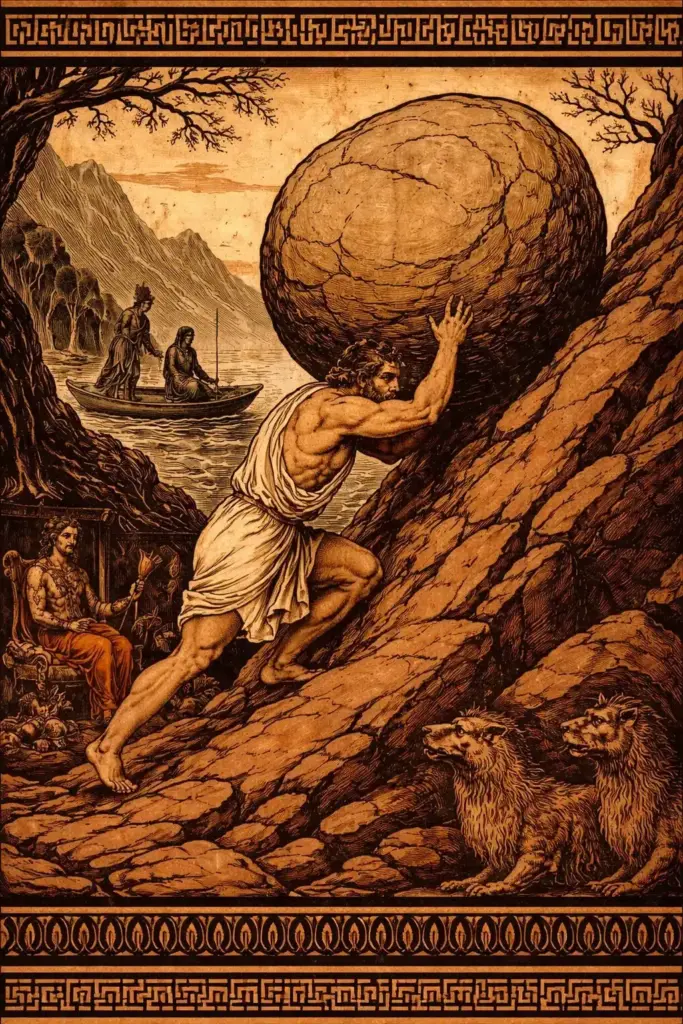
One kills oneself because life is not worth living; that is certainly a truth, yet an unfruitful one because it is a truism. But does that insult to existence, that flat denial in which it is plunged, come from the fact that it has no meaning? Does its absurdity require one to escape it through hope or suicide? This is what must be clarified, hunted down, and elucidated while brushing aside all the rest.
Camus is separating two things people casually merge together:
- “Life hurts”
- “Life has no meaning”
Those are not identical.
He says many people jump too quickly from:
“Existence feels unbearable”
to:
“Therefore existence is meaningless.”
But that conclusion itself has not yet been examined.
So he asks the real philosophical question:
If life is absurd — if there is no ultimate cosmic meaning — does that logically require suicide?
His answer becomes: no.
Because suicide secretly accepts the idea that life must possess transcendent meaning to deserve continuation. Camus rejects that demand itself.
The absurd is born from the collision between:
- the human hunger for meaning
- and the universe’s silence
But instead of escaping through:
- religion (“hope”)
- or death (“suicide”)
he proposes revolt:
to live fully without metaphysical guarantees.
That’s why Camus feels emotionally different from nihilism.
Nihilism says:
“Nothing matters.”
Camus says:
“Meaning is not given. Yet experience, struggle, beauty, rebellion, love, sunlight, creation — still remain.”
The absurd man stops asking the universe for permission to live.